Environmental Education through the Eco Ace Programme
Discover how Yio Chu Kang Secondary School's Eco ACE Programme nurtures students and staff to champion green habits, create sustainable solutions, and inspire their community.
Eco Ace Programme
VISION
A community of environmentally-conscious staff and students.
MISSION
The Environmental Education in Yio Chu Kang Secondary aims to nurture responsible staff and students who show respect and do their part for the environment.
Our Eco Ace Programme
Yio Chu Kang Secondary School and Chong Boon Secondary School have a rich heritage in promoting environmental sustainability through environmental education and efforts. Since 2018, the merged school taps on the strength of both schools and commits to nurture responsible staff and students to show respect and do their part for the environment through the Eco ACE Programme.

An overview of the Yio Chu Kang Secondary School (YCKSS) Eco-ACE Programme, highlighting student-led environmental initiatives and sustainability projects aimed at building a greener school community.
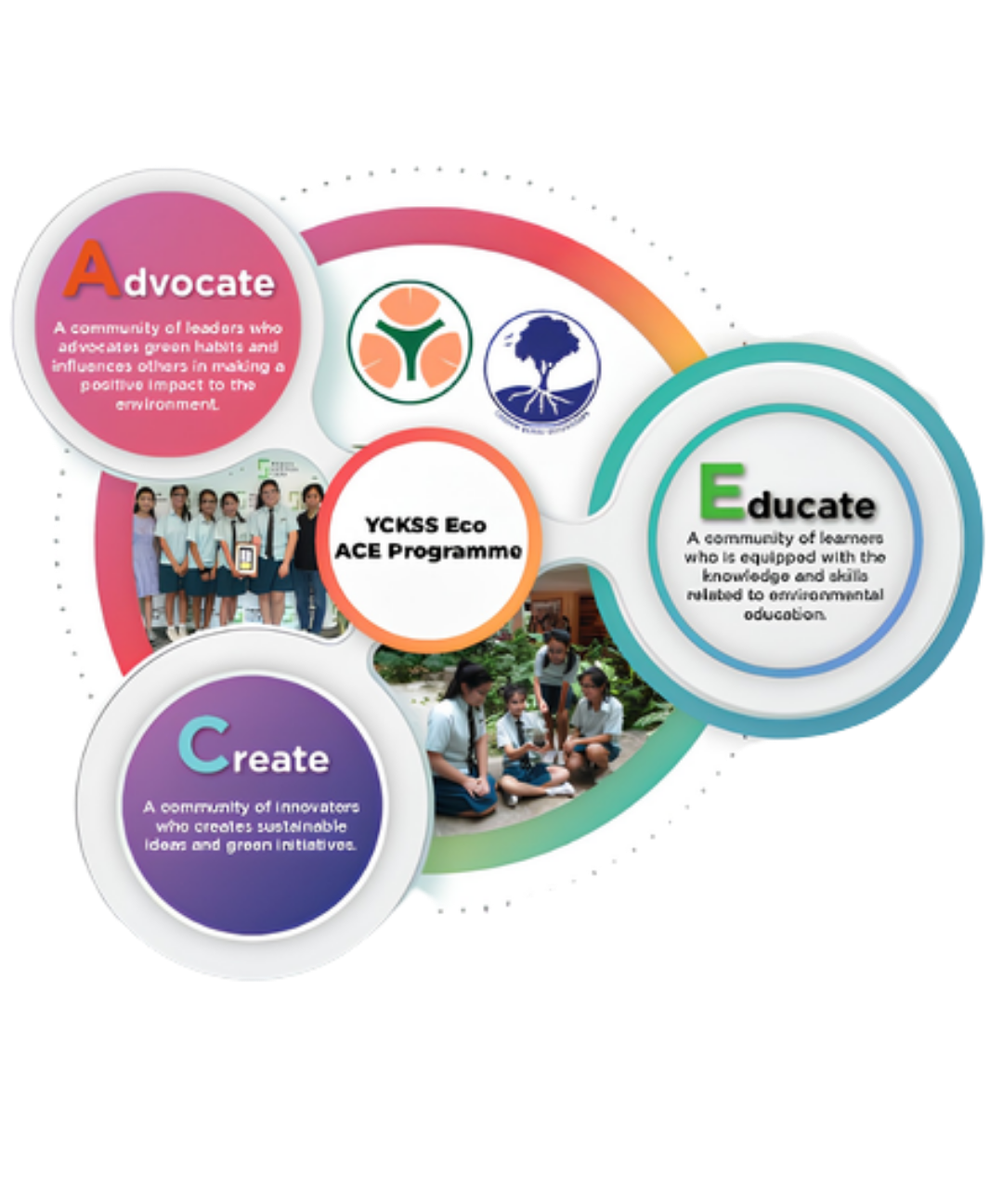
The Environmental Education Programme in Yio Chu Kang Secondary School, known as the Eco ACE Programme, adopts the ACE Approach and is aligned to the school’s vision, ‘A Community of Learners, Leaders and Innovators’.
The ECG curriculum lessons help students discover their interests, strengths, values, passions and aspirations, and develop a sense of purpose in life. Through structured learning and reflection, students gain greater self-awareness and learn how their personal attributes and aspirations can shape their education and career choices. The Eco ACE Programme aims to cultivate in students the right knowledge, skills and dispositions for the future and to nurture them to grow into environmentally conscious citizens.
The programme also leverages on existing physical and cultural infrastructure to create a school-wide movement towards sustainability. The school Is also on the look out to develop passionate students, to be Environment Ambassadors who are able to exercise sound and discerning decision-making as they grow into concerned and responsible citizens and influence others to do their part for the environment.
Amber, Our Eco-Icon
Our Eco-icon, Amber the Anemonefish with a strong passion in promoting environmental sustainability, staff and students co-created first eco-icon, Amber the Anemonefish.
.png)
The anemonefish is one of the endangered marine species in Singapore. The eco-icon serves as reminder to be environmentally-conscious in what we do so as to be kind to the biodiversity that shares the environment.
Advocate
A community of leaders who advocates green habits and influence others in making positive impact to the environment.— Annonymous
Advocating a Green Culture among Staff and Students
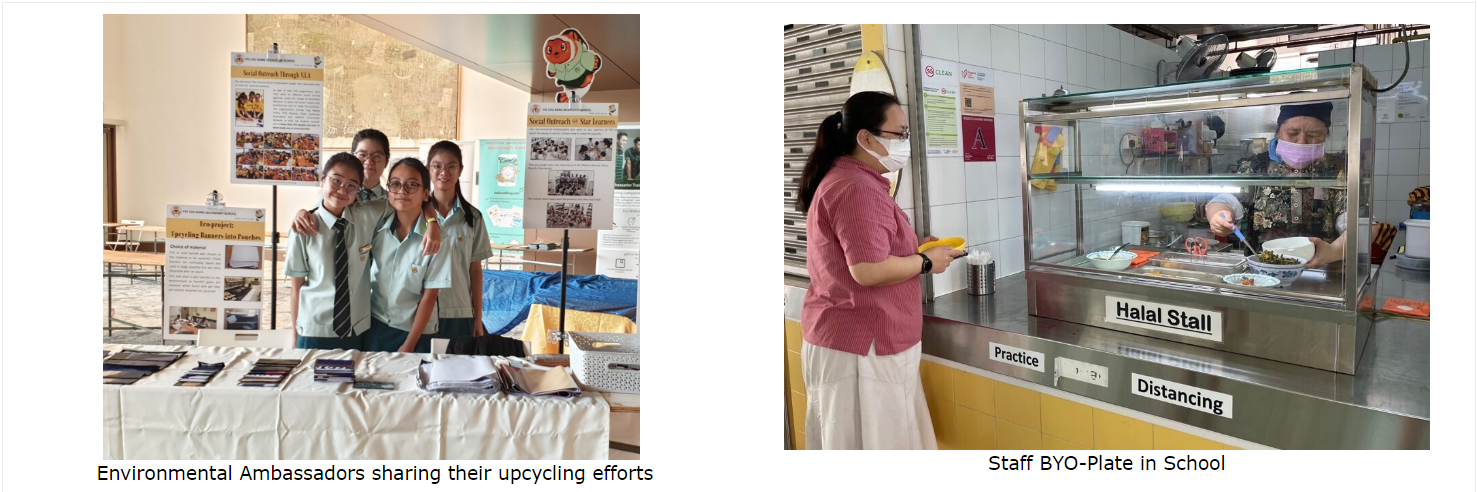
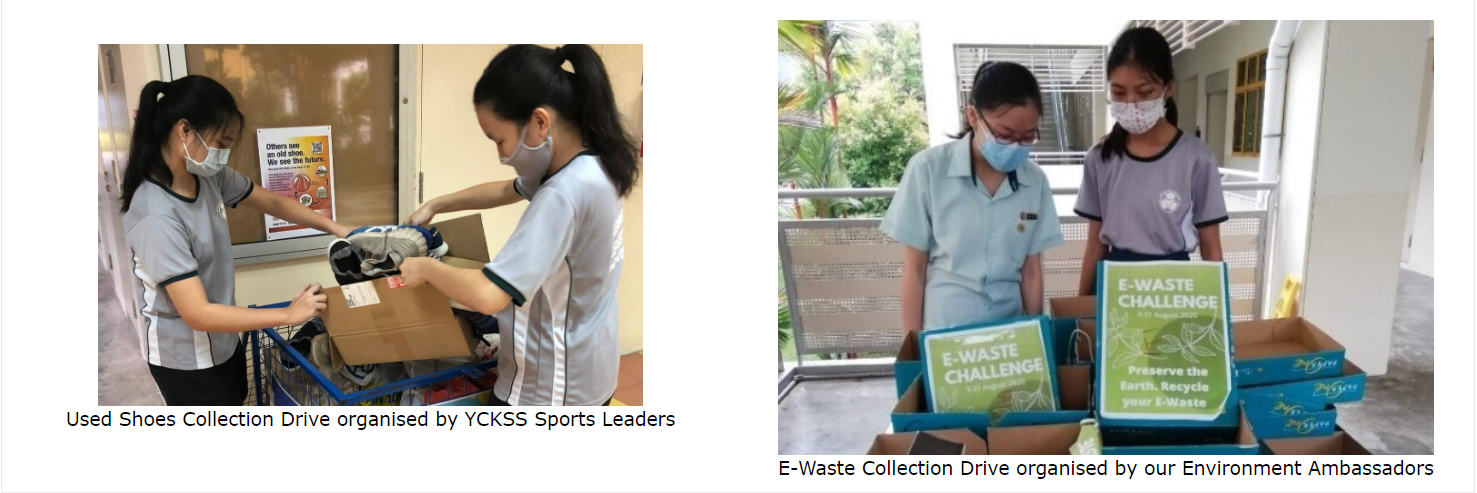
Staff and students practise and champion green habits of reducing, reusing, recycling and repurposing.
Outreach Programmes
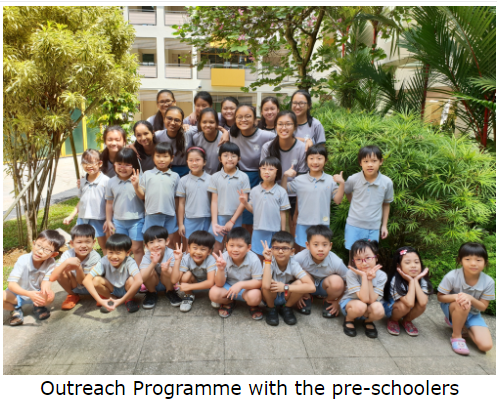
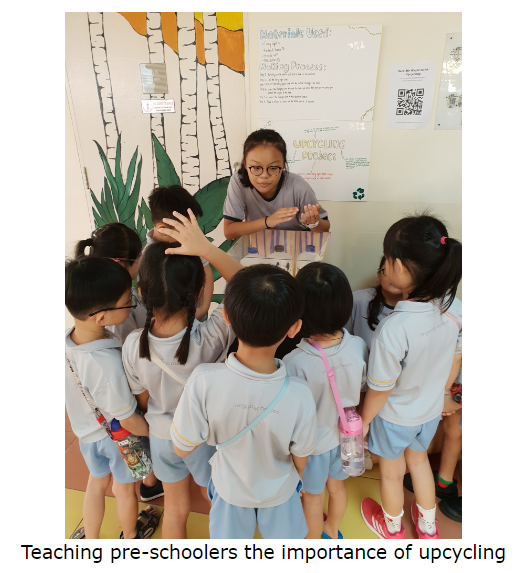
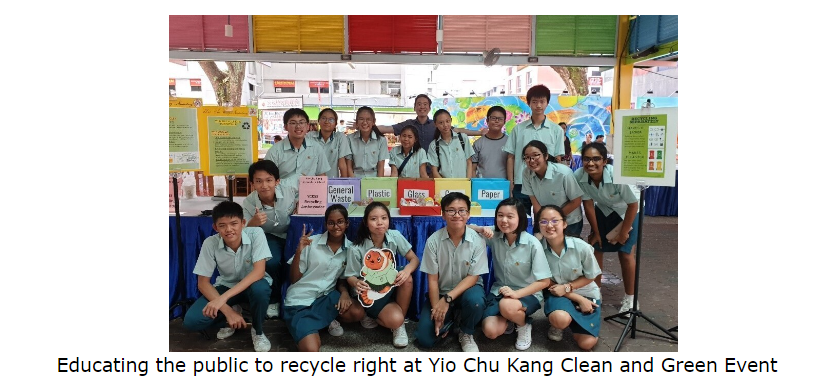
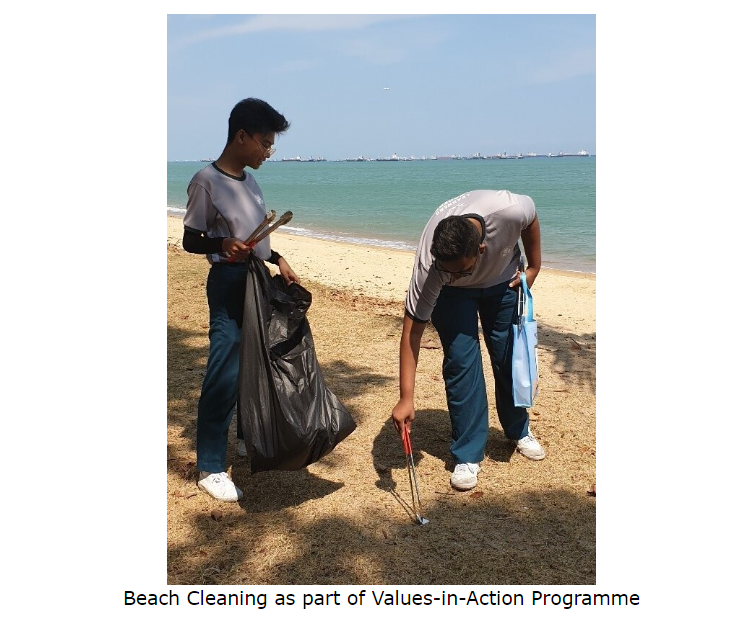
Through various platforms such as Values-in-Action Programme, Service Learning and other outreach programmes, students have the opportunities to spread their green messages to the community.
Create
A community of innovators who creates sustainable ideas and green initiatives.— Annonymous
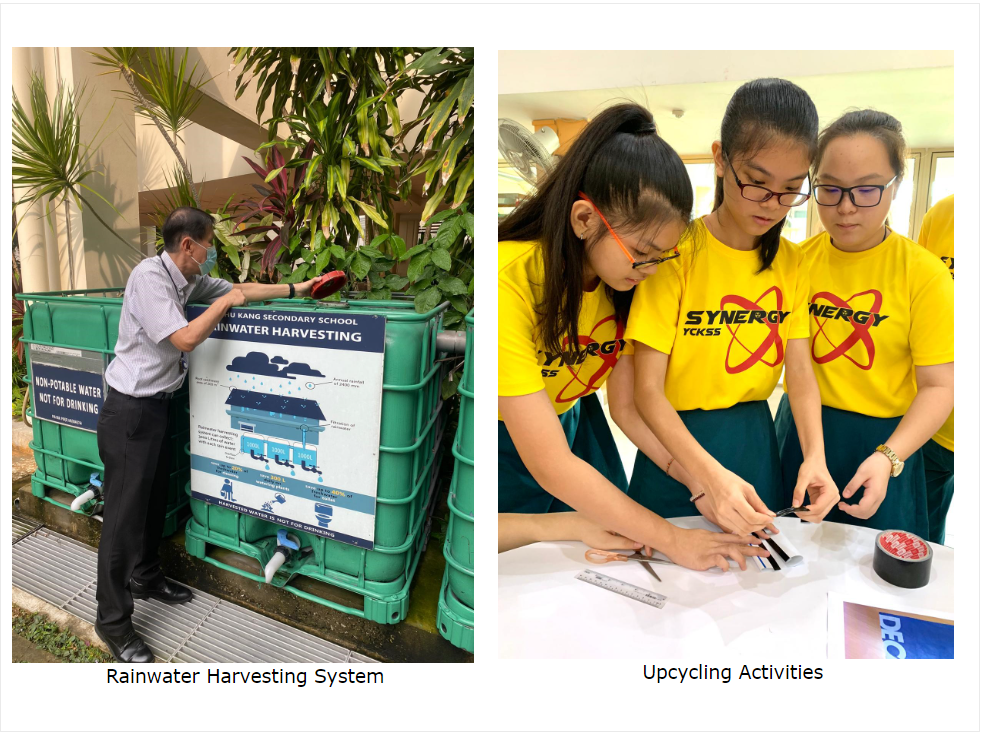
As a community of innovators, the school created and installed its own rainwater harvesting system. The rainwater collected in these tanks is used to water the green scape and for general cleaning of the school.
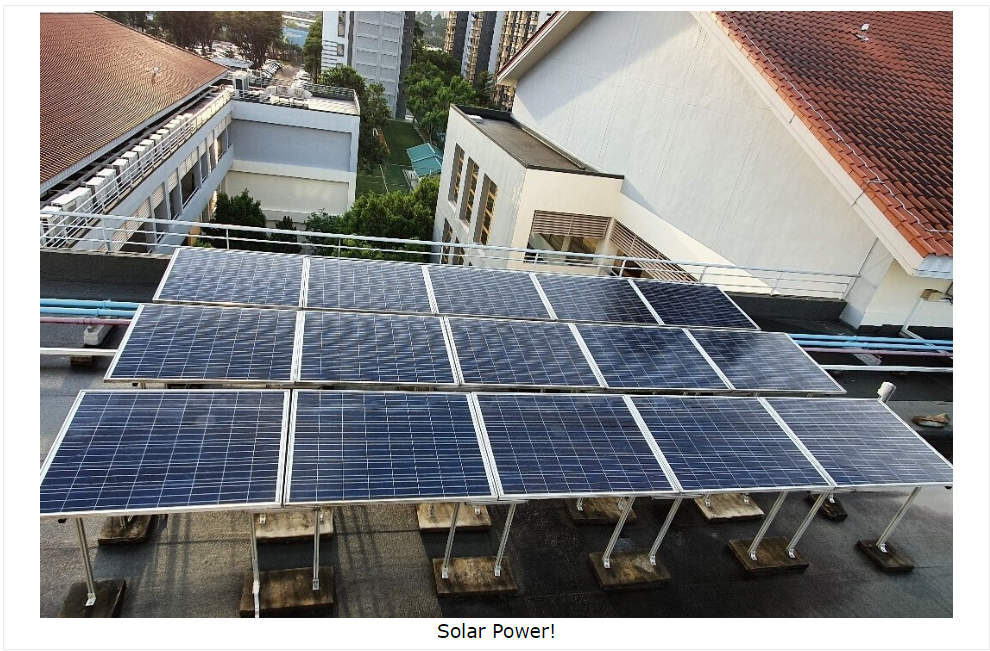
The school also has 59 solar panels that are grid-tied to a utilities company. These panels generate a significant amount of solar energy for the school. Additional solar panels, which were installed within the sight of students, serve as an authentic learning resource for students to engage in multi-disciplinary discussions.
With their creativity, students have participated in external competitions and programmes to show their commitment towards environment conservation.
Educate
In line with 21st century competencies and CCE2021, there is a larger educational call to nurture students who are able to exercise sound and discerning decision-making as they grow into concerned and responsible citizens. There is potential to develop students’ deeper appreciation for, and to motivate them into committed actions towards realising that their personal and collective lifestyle choices do have an impact on the environment.
Multi-disciplinary Eco Project
The Multi-disciplinary Eco Project is an integrated learning experience that encourages students to break away from compartmentalising the different subject disciplines. It provides opportunities for students to explore the interconnections between subjects such as Humanities, Science and Mathematics.
The integrated curriculum provides authentic problem solving experiences with application to real-world situations, tapping on Problem-Based Learning approach and incorporate RICE Thinking Skills of Reflective, Inventive, Critical and Empathetic Thinking.
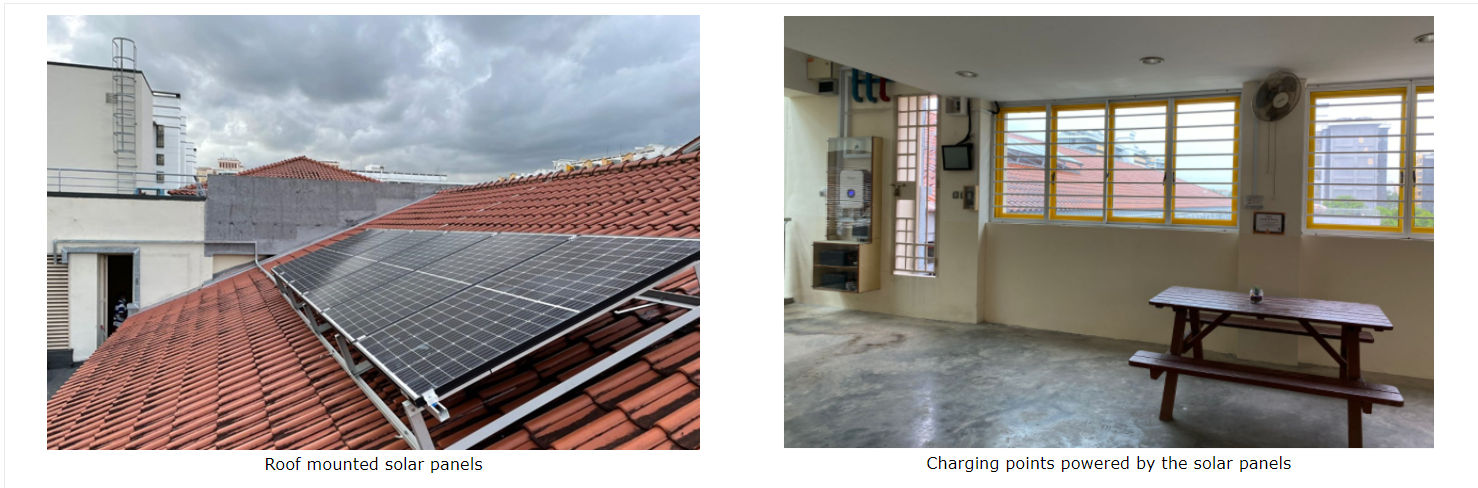
The Eco Project capitalises on technology and innovations in STEM to find viable responses to sustainability-friendly solutions and innovations. The addition of the six roof-mounted solar panels allow students to view them within their sight. The supporting system allows students to collect data on the amount of energy generated by the solar panels. The system is complemented with temperature, light intensity and humidity sensors to allow students to identify patterns between weather conditions and amount of energy harnessed by the solar panels.
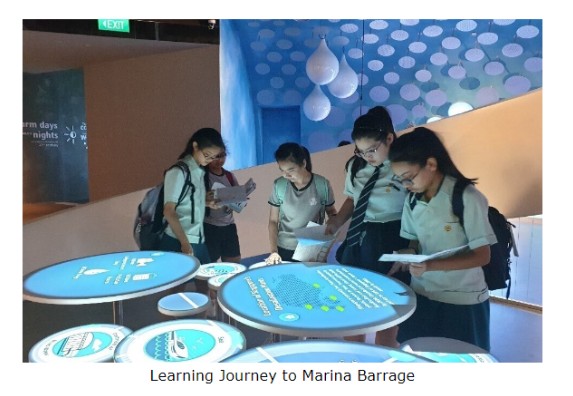
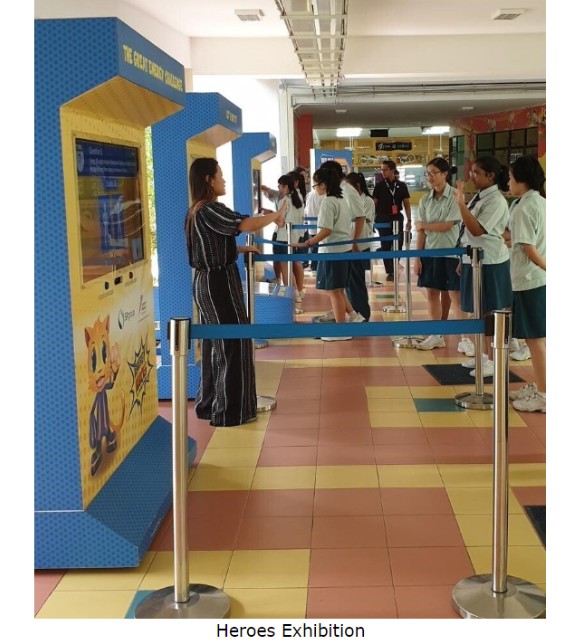
Other educational opportunities include learning journeys and activities within and beyond the school.